English
 日本語
 русский
Content
- 1 What a capable agricultural cylinder manufacturer must prove
- 2 Map the cylinder family to the implement, not the other way round
- 3 Specifications to freeze before requesting quotes
- 4 Field conditions that shorten cylinder life
- 5 Quality evidence and delivery checks before you order
- 6 Replacement cylinders: six measurements that prevent a costly misfit
- 7 OEM and nonstandard programs: what good collaboration looks like
A front-loader cylinder that starts weeping oil at the rod seal during harvest is not a minor maintenance item. It can stop a loading cycle, contaminate a field, and force a replacement that may not match the original pin-to-pin length. That is why buying agricultural hydraulic cylinders is less about finding the longest catalog and more about finding a manufacturer that can prove the design against a real implement duty.
The strongest agricultural hydraulic cylinder manufacturers are not automatically the largest or the cheapest. They are the ones that can freeze bore, rod, stroke, pin-to-pin length, mounting, port threads, seal package, coating, test evidence, and replacement support before production starts. Get those points confirmed in writing, and price becomes a meaningful comparison instead of a guess.
This guide focuses on the details that change field life and procurement risk: cylinder style, specifications, tolerances, test records, and the measurements that prevent a replacement misfit.
What a capable agricultural cylinder manufacturer must prove
Ask for proof in six areas. A supplier that can answer clearly on all six is usually easier to work with than one that only sends a price list.
- Application engineering: the ability to review a duty cycle, mounting geometry, load direction, and space envelope before selecting a cylinder.
- Drawing control: controlled drawings that show bore, rod, stroke, closed length, pin-to-pin length, port position, thread type, and paint or coating.
- Seal and surface choices: a seal package matched to dust, slurry, fertilizer, UV, and temperature, plus a rod finish that resists scoring.
- Test evidence: pressure hold, leak test, dimensional report, and where required, cycle or burst verification.
- OEM and nonstandard capability: the ability to work from a customer drawing or a sample, not only from a standard model list.
- Replacement support: seal kits, spare parts, and a warranty position that is clear about wear, contamination, and misapplication.
Price still matters, but compare it after these points are fixed. A low piece price can hide tooling, testing, packaging, or a seal package that will not survive a season.
Map the cylinder family to the implement, not the other way round
Start with the function, then choose the cylinder style. A useful family tree looks like this:
Figure 1: Cylinder family tree for agricultural equipment
- Lifting and tipping
- Front loader: lift, bucket tilt, quick coupler
- Farm trailer: tipping, tailgate, side discharge
- Steering and position control
- Tractor steering and draft control
- Implement depth and gauge-wheel adjustment
- Pickup and compression
- Baler: pickup lift, chamber tension, tailgate
- Harvester: header lift, reel adjustment, unloading
- Special duty
- Telescopic cylinders for long-stroke tipping
- Heavy-duty or nonstandard cylinders for high shock and tight space
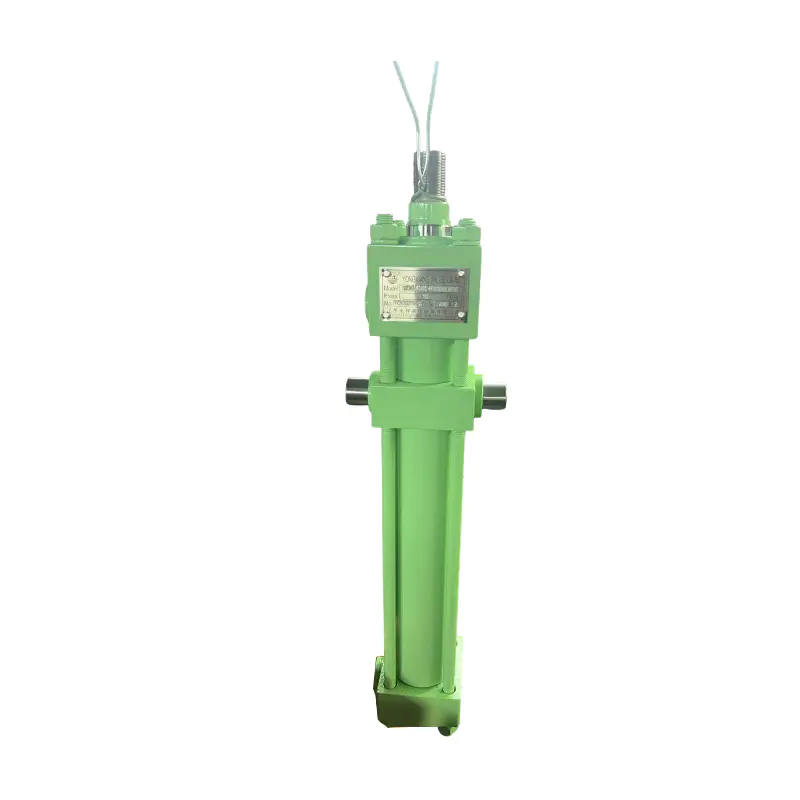
For many loader and implement duties, a tie-rod cylinder is easy to service because the tie rods and end caps can be accessed without cutting the barrel. That matters when a seal kit has to be fitted in a farm workshop rather than a factory.
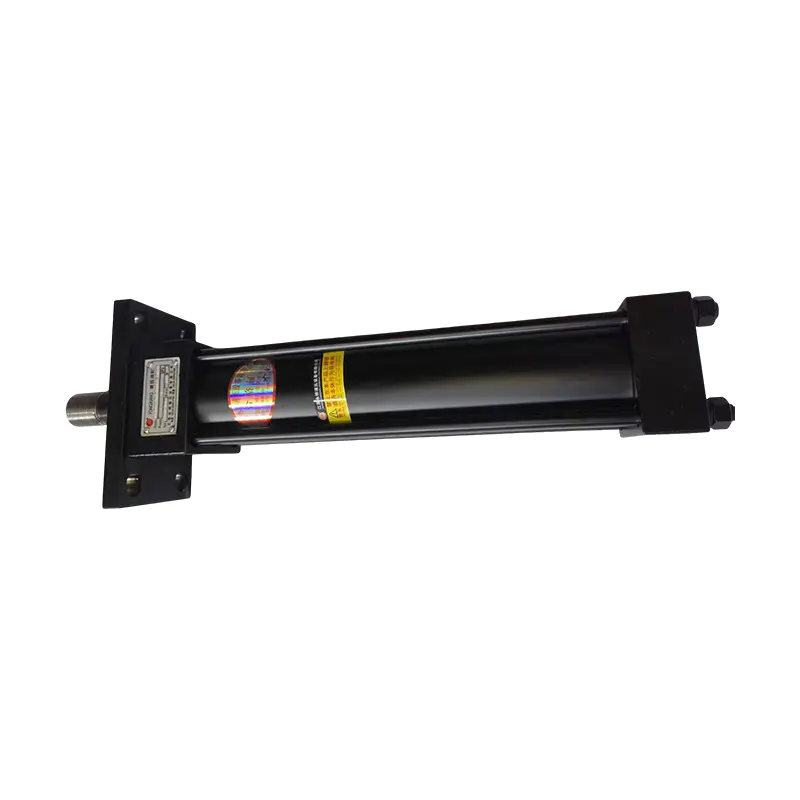 Tie-Rod Hydraulic Cylinder Range for Serviceable Machine MountingRepairable clamped-barrel tie-rod cylinders with foot, flange, clevis, or trunnion mounting suit loader and implement duties where seal servicing matters.View Product →
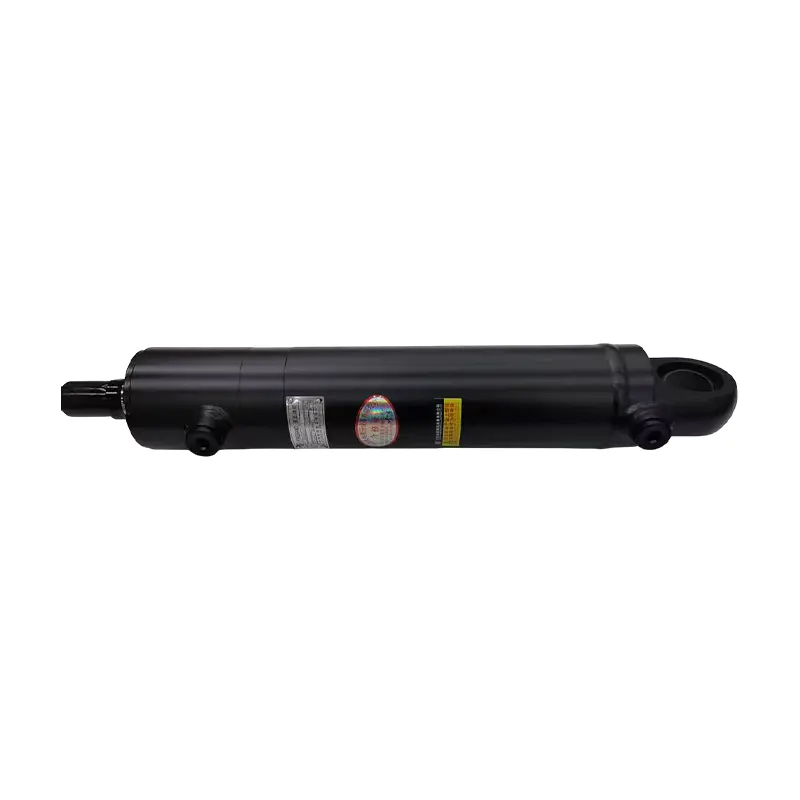
Welded cylinders suit compact envelopes and higher pressure density, especially where the cylinder is part of an OEM design and the mounting is fixed by the machine frame.
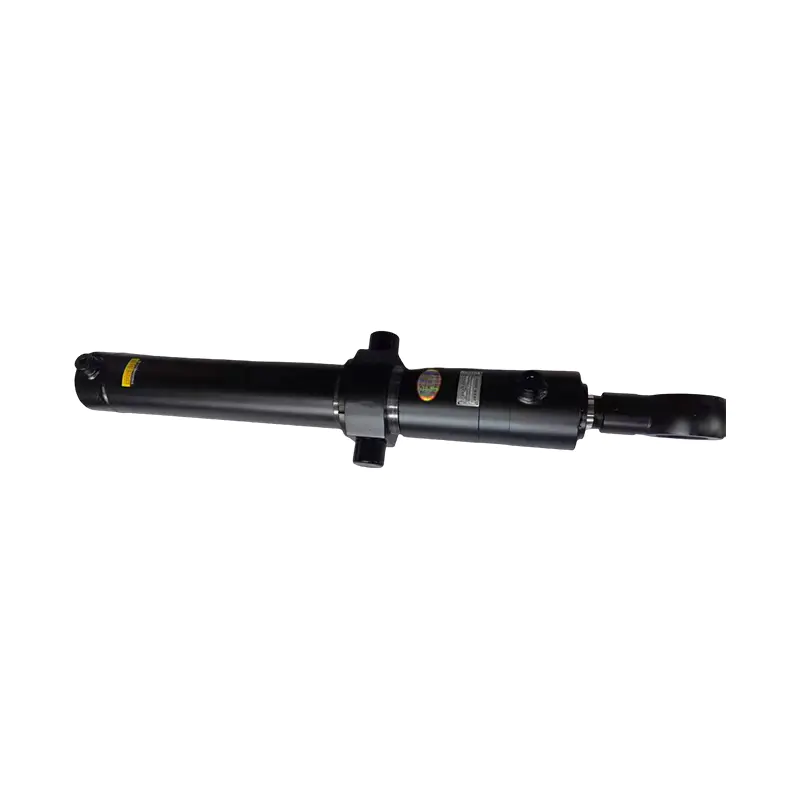 Welded Hydraulic Cylinder Range and Heavy-Duty VariantsDouble-acting welded cylinders with configurable mounting, port orientation, and cushion placement suit engineering, mining, and lifting machinery; specialized high-pressure variants extend the range.View Product →
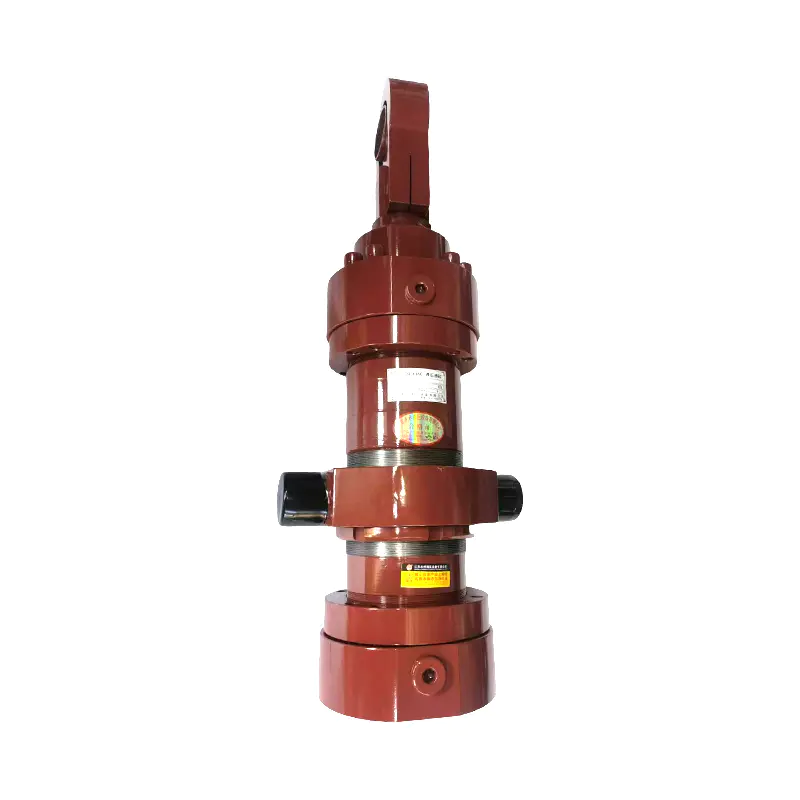
Telescopic cylinders are the practical choice when a trailer or tipping body needs a long stroke from a short closed length. The trade-off is that stage alignment, seal protection, and rod finish become even more important.
For a broader view of implement duties, the agricultural machinery applications page is a useful starting point before a drawing review.
Specifications to freeze before requesting quotes
Most quote errors start with a missing dimension. If two suppliers quote different pin-to-pin lengths or port threads, the prices are not comparable.
| Parameter | What to specify | Why it matters |
|---|---|---|
| Bore and rod | Bore diameter, rod diameter, and tolerance | Sets force, rod buckling margin, and seal selection |
| Stroke | Working stroke plus closed and open lengths | Prevents interference and lost travel |
| Mounting | Pin diameter, clevis width, trunnion position, base holes | Controls side load and frame fit |
| Ports | Thread type, size, angle, and hose clearance | Avoids adapters, leaks, and hose rubbing |
| Pressure | Continuous working pressure and peak pressure | Prevents under-specified tube, rod, and seals |
| Environment | Dust, slurry, fertilizer, temperature, wash-down | Drives coating, wiper, and seal choice |
Put tolerances in writing. For many cylinder designs, a bore tolerance in the H8 to H9 range and a rod tolerance around f7 are common reference points, but agricultural machines vary widely. The drawing and the application should decide, not a catalog default.
Pressure needs two numbers: continuous working pressure and peak pressure. Ask for the proof or hold test and the burst ratio. For many industrial cylinders, a 1.5-times proof hold and a 4:1 burst ratio are common benchmarks; confirm the applicable standard for the machine.
Field conditions that shorten cylinder life
Agricultural cylinders rarely fail from one clean overload. They fail from repeated exposure: dust drawn past a wiper, slurry packed around a rod, fertilizer attacking paint, UV hardening a seal, and shock loads bending a rod that was selected too close to its limit.
| Implement group | Dust and slurry | Load shock | Corrosion risk |
|---|---|---|---|
| Front loader | ||||| | |||| | ||| |
| Farm trailer | |||| | ||| | |||| |
| Baler | ||||| | |||| | || |
| Harvester | ||||| | ||||| | ||| |
Use the exposure profile to specify the rod coating, wiper, breather, and paint system. A hard-chrome rod with a protected wiper is a different proposition from a bare rod in a slurry environment. For high dust, a rod boot or guard may be more useful than a thicker chrome layer.
Common failure modes are rod seal leakage from contamination, bent rods from side load, cracked ports from hose strain, and pin wear from poor lubrication. Each has a design response: larger rod diameter, better mounting alignment, port reinforcement, and hardened pins or bushings.
Quality evidence and delivery checks before you order
Request the quality package with the quotation, not after the first shipment. A manufacturer that routinely supplies these records is usually better prepared for OEM work.
- Material certificates for tube, rod, and major machined parts.
- Dimensional report covering bore, rod, stroke, pin-to-pin length, and port position.
- Pressure hold and external leak test results.
- Rod coating thickness and, where relevant, salt-spray or corrosion test data.
- Seal batch and supplier traceability for critical seals.
- First article inspection report before volume production.
Delivery checks should cover sample lead time, batch traceability, packaging, and spare-parts availability. A one-year warranty is common, but confirm what it covers. Wear from contamination, bent rods from side load, and damage from incorrect hose routing are usually treated differently from a manufacturing defect. Clear service and support terms are part of the purchase, not an afterthought.
Replacement cylinders: six measurements that prevent a costly misfit
A replacement cylinder can look correct and still be wrong. Measure the old unit before ordering, especially if the machine has been modified or the original label is missing.
- Pin-to-pin length: measure fully retracted and fully extended, with the pins in place if possible.
- Bore and rod diameter: measure or read the stamping; do not rely on the machine model alone.
- Mounting structure: record clevis width, pin diameter, trunnion position, and any offset.
- Port details: thread type, size, angle, and clearance to the hose or frame.
- Stroke: confirm usable travel and whether the cylinder has internal cushioning.
- Machine information: model, serial number, and photos of the installation from three angles.
Photograph the old cylinder before cleaning it. Paint marks, hose rubs, and rod scoring tell a designer more than a single dimension. If the original port is BSPP and the replacement is NPT, the adapter may fit but the hose clearance may not.
OEM and nonstandard programs: what good collaboration looks like
OEM and nonstandard work is where a manufacturer's engineering process becomes visible. Jiangsu Yongxiang Hydraulic Equipment Co., Ltd., based in Jiangsu and active since 2005, produces standard tie-rod, welded, telescopic, and heavy-duty/metallurgical cylinders, plus nonstandard cylinders and hydraulic power units. Its technical team describes work from scheme design and simulation through prototype trial, process implementation, and test verification.
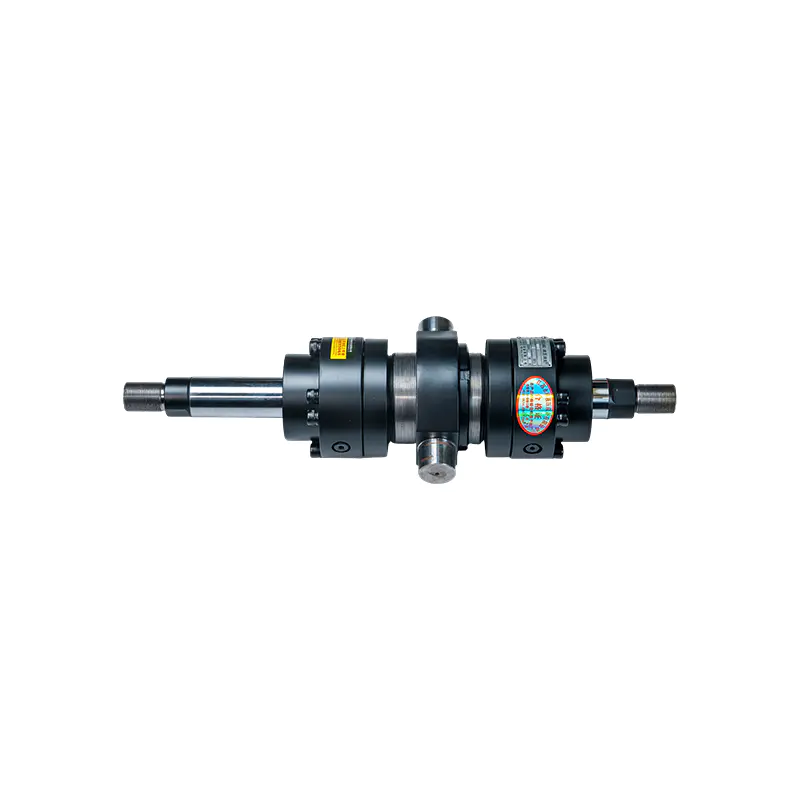
 Custom Non-Standard Hydraulic Cylinders for OEM/ODM ProgramsCustom-engineered cylinders for non-catalog strokes, mountings, extreme loads, or sensor integration, supported by drawing review, prototype verification, pressure testing, and one-year warranty.View Product →
Good collaboration starts with a drawing review that questions rod buckling, side load, port access, and seal environment. It continues with a prototype or first article, a dimensional report, and a clear change-control path. For OEM programs, ask how the manufacturer handles drawing revisions, serial traceability, and spare-parts planning.
A low piece price can hide tooling, test fixtures, packaging, and a seal kit that is difficult to source later. Compare total cost over the service life, including downtime risk and replacement lead time.
A practical shortlist method is to send the same duty sheet to three manufacturers: implement type, bore, rod, stroke, pin-to-pin length, pressure, port thread, environment, and annual volume. Compare how each one responds. The best answer will not be the longest email; it will be the one that identifies missing data, explains the seal and coating choice, and states the test evidence before asking for a price.
That is the practical difference between agricultural hydraulic cylinder manufacturers that supply parts and those that support a machine through a full season.