English
 日本語
 русский
Content
- 1 Three Kinds of Custom, Three Different Suppliers
- 2 The Specification Sheet That Makes Quotes Comparable
- 3 Matching Cylinder Architecture to the Duty Cycle
- 4 What to Verify Before You Release a Purchase Order
- 5 Procurement Risks Worth Pricing Into the Budget
- 6 Where the Cost and the Lead Time Actually Come From
- 7 Working With an Overseas OEM/ODM Partner
Most custom hydraulic equipment projects stall in the first email, not on the shop floor. A buyer sends a bore size, a stroke and a pressure rating, then waits two weeks for three quotations that cannot be compared: one prices a welded cylinder, one prices a tie-rod design, and none of them reflects the duty cycle the machine actually runs.
The manufacturers worth shortlisting respond differently. They return a structured list of open questions before they return a number. Everything below is written from the supply side of that exchange, and it is meant to help you screen custom hydraulic equipment manufacturers on specification discipline, engineering depth and delivery honesty rather than on brochure language.
Three Kinds of Custom, Three Different Suppliers
Conclusion first: "custom" is not one product category. The three levels below attract different factories, different price structures and different lead times, and a supplier who treats all three as the same request will either over-engineer the simple job or under-engineer the difficult one.
- Configured standard. A catalogue cylinder with a changed stroke, port position, rod thread or paint system. The bore, tube, gland and piston geometry stay on existing tooling, so the engineering risk is low and the price premium is usually modest.
- Modified standard. Same family, but with new seals for a temperature range, a different rod surface treatment, an integrated valve block or a non-standard mounting. Drawings are adapted and a prototype is normally expected.
- Full custom. A new design envelope: off-axis loading, extreme stroke-to-bore ratios, subsea or high-temperature duty, or a cylinder that must fit inside an existing machine frame with millimetre clearance. This is where simulation, first-article approval and test documentation decide the outcome.
The bars below show indicative elapsed time from a complete enquiry to an approved first article. They are planning ranges, not commitments, and they widen quickly when the number of drawing revisions or third-party inspections grows.
If your project sits in the third band, confirm early that the supplier has a separate route for non-standard work rather than a queue that standard orders keep jumping.
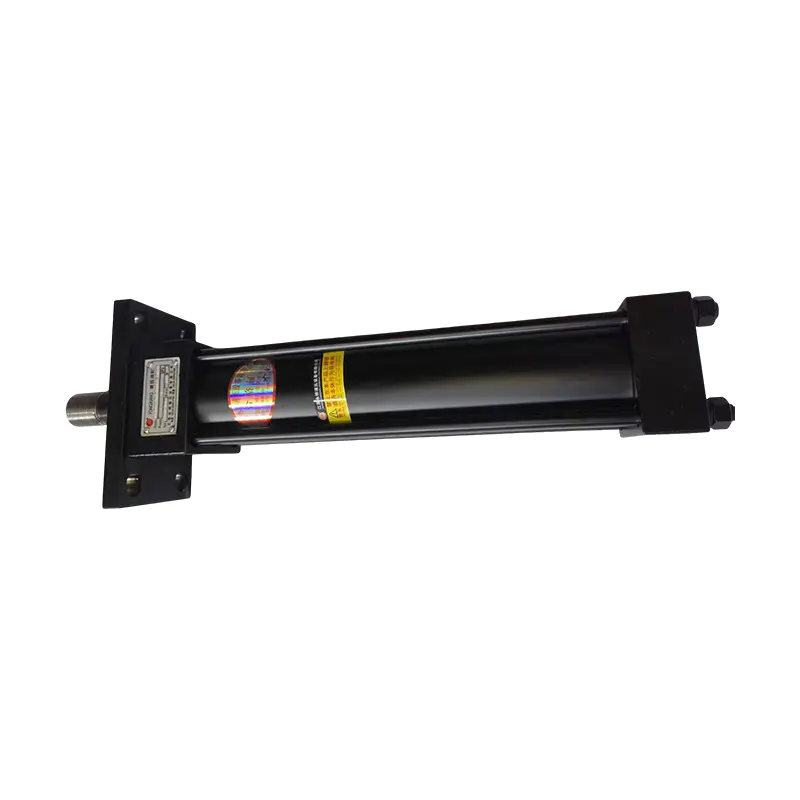
 Custom Non-Standard Hydraulic Cylinder OEM/ODMCustom-engineered for non-catalog bore, stroke, rod, mounting, sensor, and harsh-environment requirements; one-unit minimum order and typical 50–60 day lead time.View Product →
The Specification Sheet That Makes Quotes Comparable
Send every candidate the same document and require answers in the same units. The table lists the fields that most often go missing on an enquiry, together with the design change each one forces.
| Input | What it changes in the design | Common default when unspecified |
|---|---|---|
| Working and peak pressure | Tube wall thickness, rod diameter, bolt grade, seal hardness | Rated pressure only, no fatigue allowance for peaks |
| Duty cycle (cycles per hour, hours per year) | Bearing material, rod chrome thickness, cushioning, cooling | Intermittent duty assumption, undersized bearings |
| Fluid type and operating temperature | Seal compound, fluid compatibility, clearances | Mineral oil at 40-60 °C |
| Mounting style and alignment | Trunnion, clevis or flange geometry; side-load capacity | Axial load only, no allowance for deflection |
| Rod surface specification | Chrome or ceramic coating thickness, surface roughness | Standard hard chrome, single thickness |
| Stroke, bore and rod diameter tolerance | Machining route, honing, inspection method | General tolerance, no inspection record |
| Test and documentation requirement | Proof pressure, hold time, witness inspection, report pack | Works test without certificate |
Tolerances are where quotations diverge most in price and least in appearance. A rod finished at 20 µm of chrome and a bore honed to a finer surface roughness can carry a meaningful premium over a general-tolerance equivalent, yet both look identical on a two-line quote. Ask each supplier to state the surface roughness, chrome thickness, straightness and concentricity figures they are committing to, and you will find that the cheapest bid is frequently the one that quietly left those numbers out.
One practical habit: number every drawing revision and require the supplier to confirm the revision number in writing. Cylinder disputes are far more often revision disputes than manufacturing defects.
Matching Cylinder Architecture to the Duty Cycle
Architecture should follow load and cycle count, not preference. Three families cover most industrial requests, and each has a working envelope where it is clearly the cheaper answer over the service life.
Heavy and metallurgical duty. Continuous casting, rolling stands and mining equipment combine high pressure with shock loading, heat radiation and contaminated surroundings. The deciding features are wall thickness, a robust bearing arrangement at the pivot, and a seal package that tolerates temperature swings rather than just nominal pressure. Center-trunnion pivots are common here because the mounting carries the moment that would otherwise reach the rod.
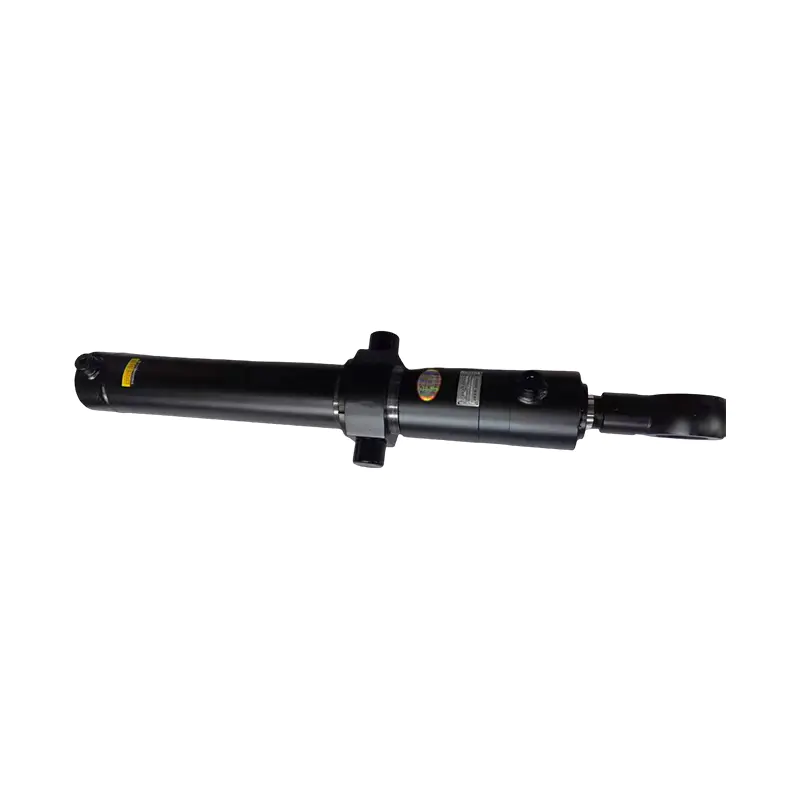
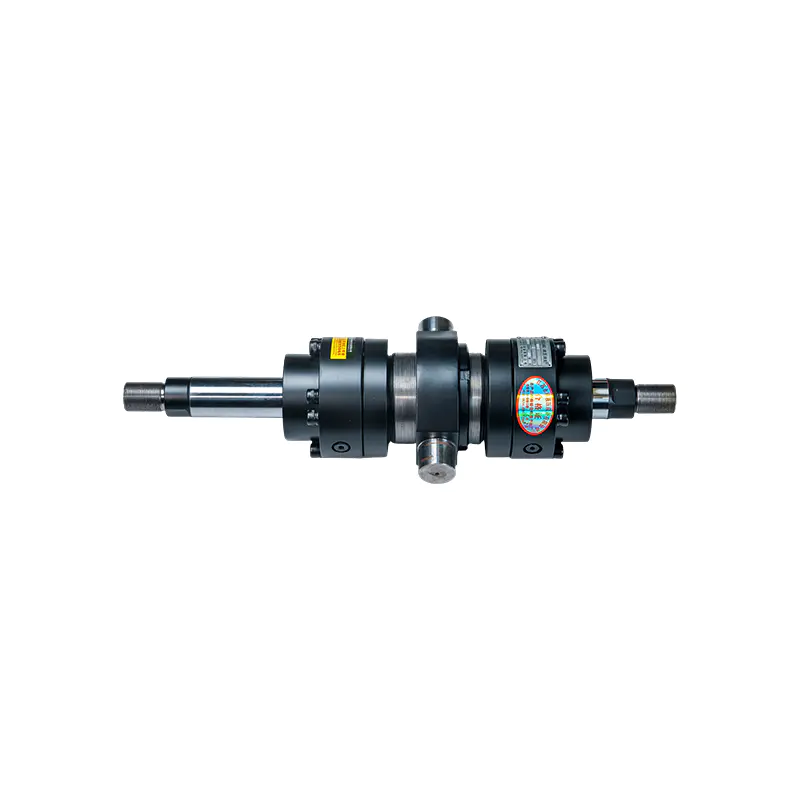
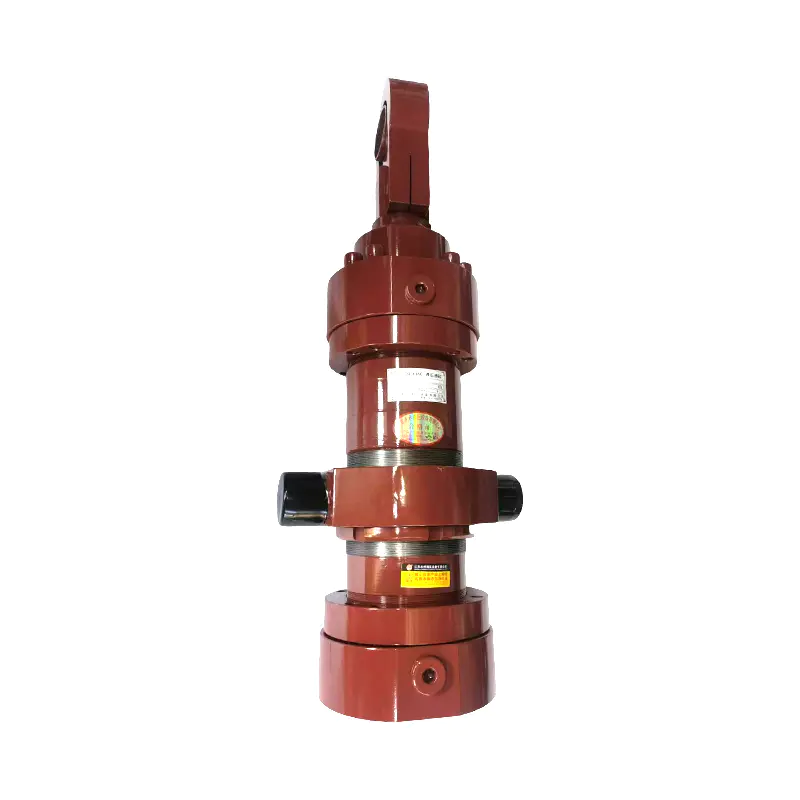 Heavy-Duty Center Trunnion Pivot Hydraulic CylinderMiddle-trunnion mounting reduces lateral rod loads and extends seal life for high-pressure, high-frequency metallurgical, mining, press, and heavy lifting duty.View Product →
Very high pressure with limited envelope. When the machine frame leaves no room for a larger bore, pressure rises and welded construction usually wins: fewer joints in the load path, better material utilisation, and a smaller outer diameter for the same thrust. The trade-off is that the barrel becomes effectively non-repairable, so the seal choice has to be right the first time.
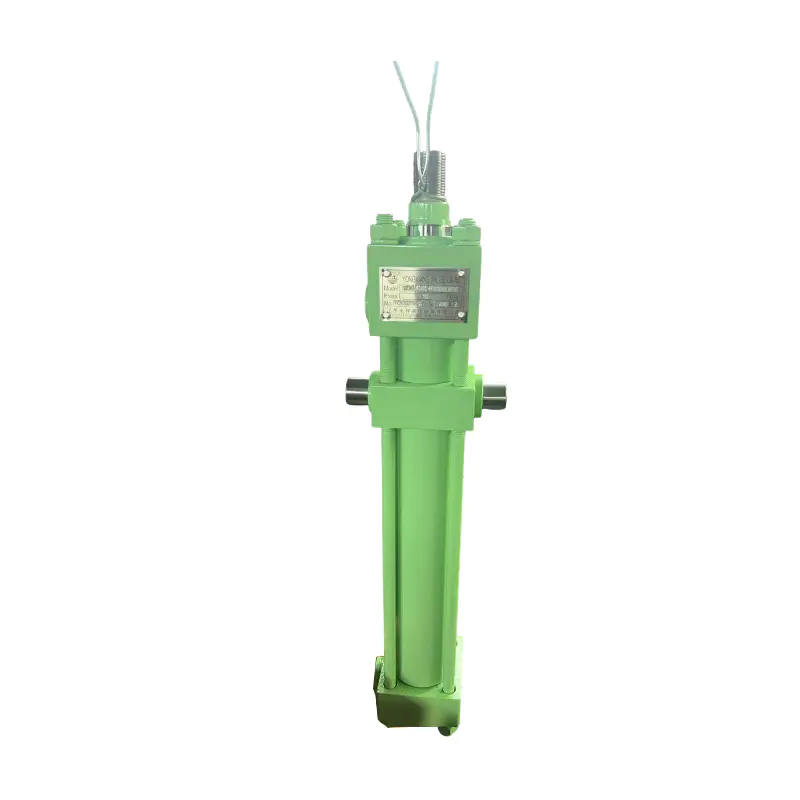
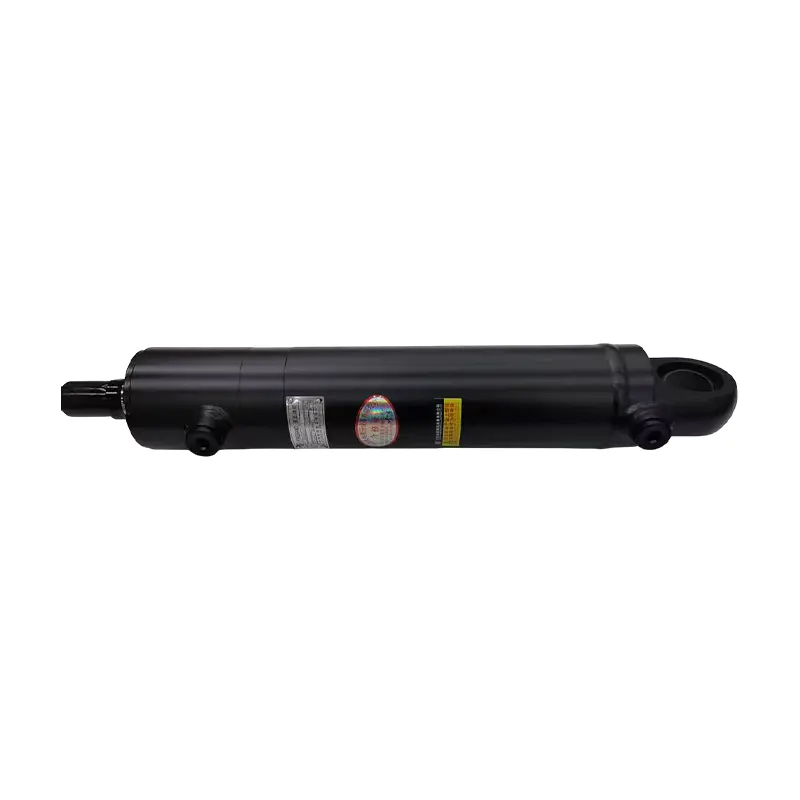 Ultra-High-Pressure Heavy Metallurgical Hydraulic CylinderForged body with heavy threaded caps, adjustable cushioning, and fire-resistant-fluid seals for metallurgical duty at 25 MPa and above.View Product →
Tie-rod construction, high cycle. Where the cylinder runs hundreds of thousands of cycles in automation, the ability to re-torque the tie rods and replace the seal kit in place is worth more than any small gain in stiffness. Specify the rod bearing and the cushioning detail carefully; those two items drive most premature failures in fast-cycling applications.
What to Verify Before You Release a Purchase Order
Ask for the process, not the certificate. A twelve-month warranty means very little if the supplier cannot describe the pressure test it runs, how long it holds, and what sample size it retains for traceability.
- Design capability. Does the supplier design, or only machine to your drawings? A team that runs its own simulation and produces a prototype before cutting production parts will surface interference and seal problems at the cheapest possible moment.
- Test regime. Confirm proof pressure as a multiple of rated pressure, hold time, leak-down acceptance criteria, and whether every unit or a sample is tested.
- Traceability. Material certificates linked to serial numbers, plus a record of seal batch and test results, make field failures diagnosable instead of arguable.
- Change control. Any substitution of a seal brand, chrome thickness or tube supplier should require your written approval, not a note on an invoice.
- Support boundary. Clarify in writing who pays freight on a warranty claim, what the response time is, and whether technical support includes installation guidance.
Suppliers with an established engineering department typically cover design, simulation, prototype build, process planning and validation testing in-house. That continuity matters more than any single capability, because a cylinder that fails at the interface between design and process is the hardest kind to diagnose afterwards.
Procurement Risks Worth Pricing Into the Budget
Custom hydraulic equipment carries a set of recurring risks. Naming them at the quotation stage is cheaper than discovering them during commissioning.
- Interface risk. The cylinder is correct but the pin, hose routing or mounting bracket on your machine is not. Send a mounting envelope drawing, not only a cylinder drawing.
- Seal obsolescence. A bespoke seal size that only one supplier stocks turns a routine repair into a six-week outage. Prefer standard cross-sections wherever the design allows.
- Tooling ownership. For full custom work, agree in writing who owns fixtures and whether they transfer to you.
- Incoterm drift. Compare landed cost, not unit price. FOB quotes with unclear packaging and port charges often lose their advantage by the time the container arrives.
- Documentation gaps. Missing test reports and material certificates are expensive to reconstruct and can block acceptance in regulated industries.
Where the Cost and the Lead Time Actually Come From
In a custom cylinder, material is rarely the dominant line. Machining hours on the bore, gland and rod, the seal package, testing time and the number of engineering iterations typically decide the final figure. A design that avoids a single tight-tolerance bore or an unusual thread will usually save more than a negotiation on tube price.
Volume changes the picture gradually rather than dramatically. Small batches carry proportionally higher setup and inspection cost; larger batches amortise tooling but expose you to the risk of holding inventory against a specification that may still change. Many buyers split the order deliberately: a small first article for validation, then a production release once the drawing is frozen.
Working With an Overseas OEM/ODM Partner
Cross-border sourcing of hydraulic equipment works well when the specification is unambiguous and the review rhythm is fixed. Agree a weekly drawing review, a named technical contact on both sides and a single language for drawings and reports. Companies such as Jiangsu Yongxiang Hydraulic Equipment, active since 2005, build cylinders, power units and electro-hydraulic actuators for construction, mining, oil and gas, marine and general industrial machinery, and handle OEM and ODM work with technical support and a one-year warranty behind it.
Where the application is sector-specific, ask for references in that sector rather than general marketing material. Cylinders for petroleum machinery face different corrosion and duty assumptions from those in steel mills or agricultural implements, and a supplier who already knows the environment will ask fewer wrong questions.
The shortlist test is simple. Send your least complete enquiry to five manufacturers and count how many come back with questions instead of a price. The ones that ask about peak pressure, duty cycle, mounting alignment and test documentation are the ones whose quotation you can actually hold them to. The rest are quoting a cylinder that does not yet exist.
Once the technical points are settled and the drawing revision is frozen, move the commercial discussion to a single channel so that delivery terms, packaging and documentation are confirmed together. A supplier who is comfortable being measured on specification compliance, test records and response time is the one worth keeping on the approved vendor list.