English
 日本語
 русский
Short Answer: Where a Standard Hydraulic Cylinder Wins for Lifting
For most lifting jobs, a Standard Hydraulic Cylinder is the better choice than a hydraulic motor-driven screw jack. It delivers higher force in a smaller package, moves faster, runs at much higher mechanical efficiency, and costs less per kilonewton of lifting force. A screw jack driven by a hydraulic motor adds a motor, a gearbox or worm drive, and a threaded screw. Each of these adds friction losses, wear points, and cost.
A hydraulic motor-driven screw jack still has a place. It is a good fit when you need mechanical self-locking, long holding times without pressure, or highly synchronized multi-point lifting on a simple fluid circuit. Outside those cases, a Standard Hydraulic Cylinder usually gives better performance, easier maintenance, and a lower total cost of ownership.
The rest of this article compares the two technologies on force, speed, efficiency, installation, safety, and cost, then shows how to choose between them.
How Each Lifting Method Works
Standard Hydraulic Cylinder
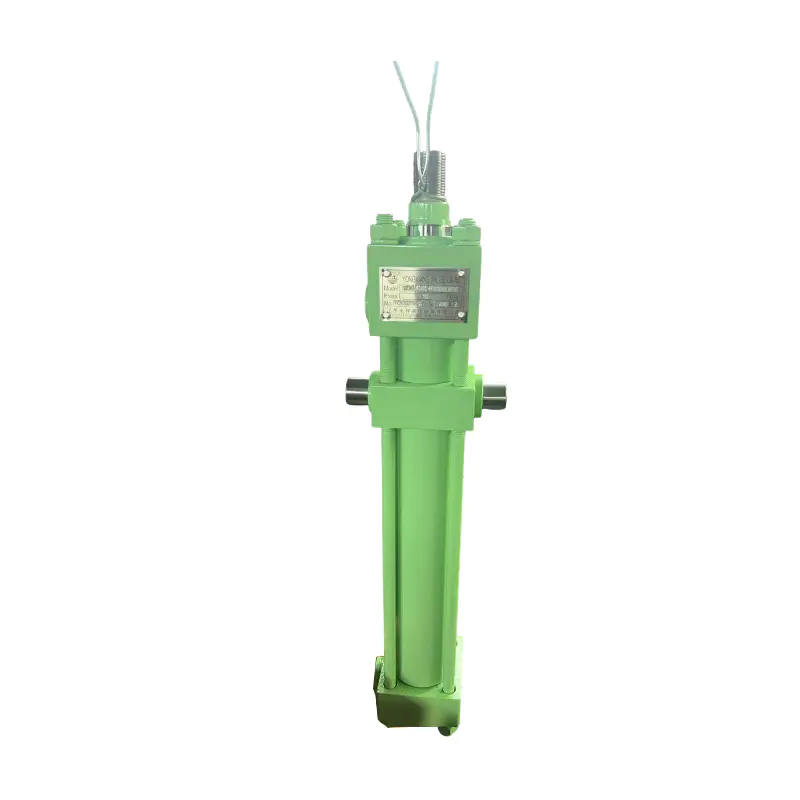
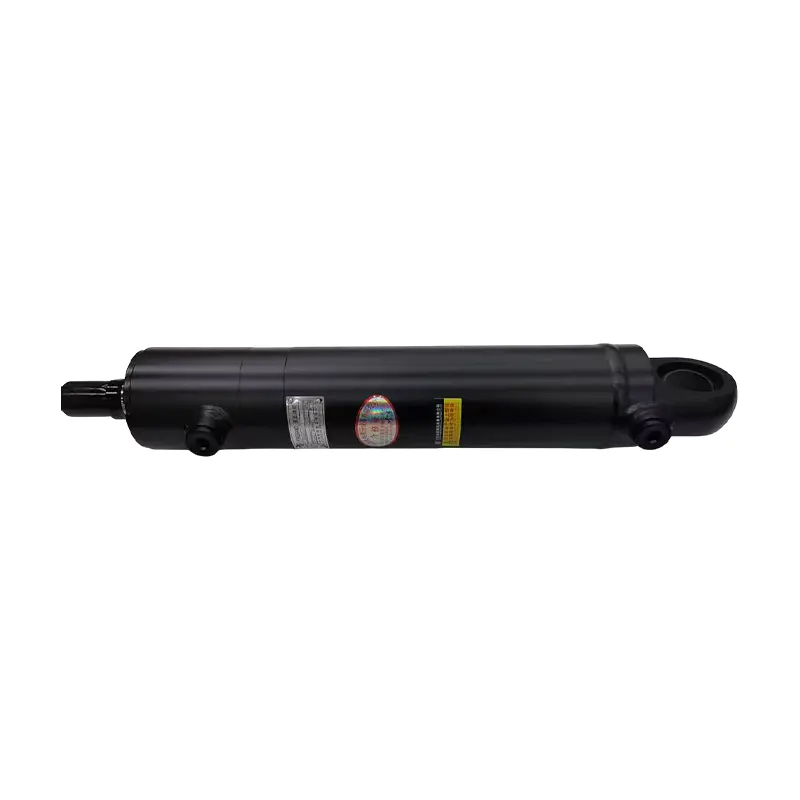
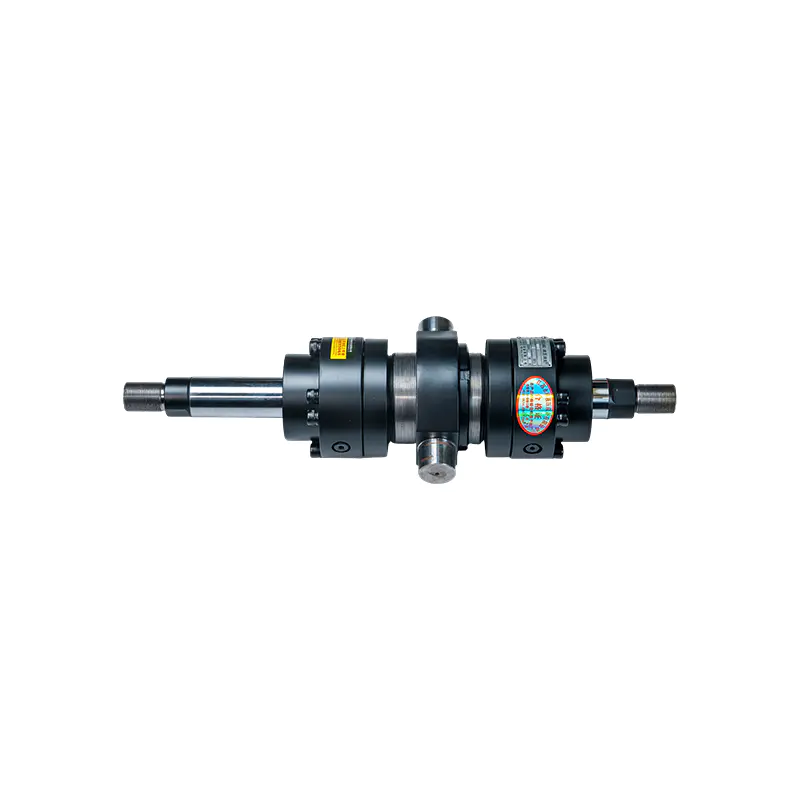
A Standard Hydraulic Cylinder converts fluid pressure directly into linear force. Pressurized oil acts on the piston area, and the piston rod extends to lift the load. The relationship is simple: force equals pressure multiplied by piston area. There is no intermediate rotary-to-linear conversion, so very little energy is lost between the pump and the load.
Hydraulic Motor-Driven Screw Jack
In a screw jack, a hydraulic motor turns an input shaft. The shaft drives a worm gear or bevel gear set, which rotates a lifting screw or a nut. That rotary motion is converted into linear travel along the screw thread. The system is mechanically more complex because oil pressure first becomes torque, then gear reduction, then thread engagement, and only then lifting force.
Every conversion step has losses. That is the main reason the two technologies differ so much in efficiency, heat generation, and wear.
Force Density and Compact Size
Hydraulic systems have a very high power-to-size ratio. At a typical working pressure of 16 MPa, a Standard Hydraulic Cylinder with a 100 mm bore produces roughly 125 kN of thrust, which is enough to lift about 12.8 tonnes. At 25 MPa, a 160 mm bore cylinder reaches about 500 kN, or around 51 tonnes, from a body that one person can often handle with a hoist.
To match that force, a screw jack needs a large lifting screw, a heavy gear housing, and a high-torque motor. Its screw diameter, thread type, and gear ratio all grow with load. The result is a heavier and bulkier unit for the same capacity.
| Bore Diameter | Pressure | Approx. Thrust | Approx. Lift Capacity |
|---|---|---|---|
| 63 mm | 16 MPa | 50 kN | 5.1 tonnes |
| 100 mm | 16 MPa | 126 kN | 12.8 tonnes |
| 125 mm | 21 MPa | 258 kN | 26.3 tonnes |
| 160 mm | 25 MPa | 503 kN | 51.3 tonnes |
Mechanical Efficiency and Energy Use
Efficiency is where the gap is widest. A well-sealed Standard Hydraulic Cylinder typically reaches 90% to 95% mechanical efficiency. Losses come mainly from seal friction and guide-ring drag, both of which are small compared with the force produced.
A screw jack has multiple lossy stages. A trapezoidal (acme) screw is commonly only 20% to 35% efficient, and a worm gear stage adds more loss. Ball screw versions reach 80% to 90% at the screw but are more expensive and lose the natural self-locking property. Because a low-efficiency screw turns much of the input energy into heat, the system needs a larger hydraulic motor and pump, and duty cycles are often limited to avoid overheating.
In practice, this means:
- A cylinder-based lift needs a smaller power unit for the same load and speed.
- Heat in the hydraulic circuit is lower, which extends oil and seal life.
- Continuous or high-cycle lifting is practical without derating.
Speed and Cycle Time
Lifting speed depends on flow rate and piston area. With a modest pump delivering 40 L/min into a 100 mm bore cylinder, the rod extends at about 85 mm per second. Doubling the flow doubles the speed, and cylinders routinely run at 0.1 to 0.5 m/s in industrial service.
Screw jacks are inherently slow because the screw lead is small relative to shaft rotation. Many units travel only a few millimeters to a few tens of millimeters per second under load. This is acceptable for positioning tasks such as stage lifts or adjustable platforms, but it hurts throughput in production lines, press tooling, and loading equipment where every second of cycle time has a cost.
Wear, Maintenance, and Service Life
A Standard Hydraulic Cylinder has few wearing parts: the rod seal, piston seals, wiper, and guide rings. These are inexpensive and can be replaced in a standard repair kit in a few hours, and many cylinders run millions of cycles with clean oil and a well-finished chrome-plated or nitrided rod.
A screw jack carries sliding or rolling contact under full load on the screw and nut. Acme screws and bronze nuts wear gradually, and backlash increases over time. Gearboxes need regular lubrication, and a worn nut can become a safety concern because it carries the entire load. Replacing a lifting nut or gear set usually means taking the whole jack out of service.
Typical Maintenance Tasks
- Cylinder: check for rod scoring, replace seals when leakage appears, and keep hydraulic oil clean to ISO cleanliness targets.
- Screw jack: lubricate the screw and gearbox on schedule, measure nut wear and backlash, and inspect the anti-rotation and end-stop hardware.
Mounting Flexibility and Installation
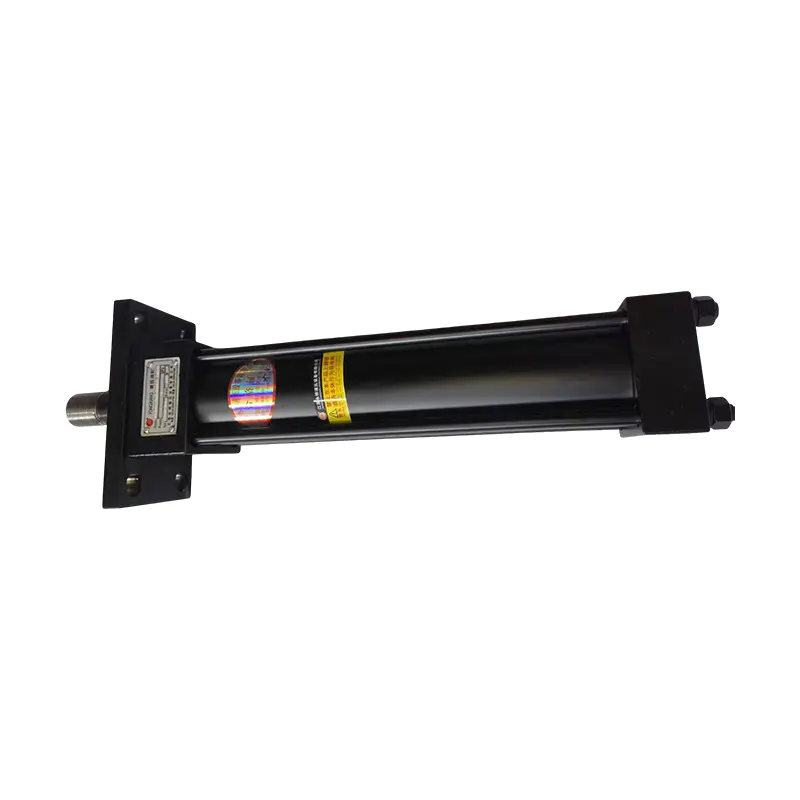
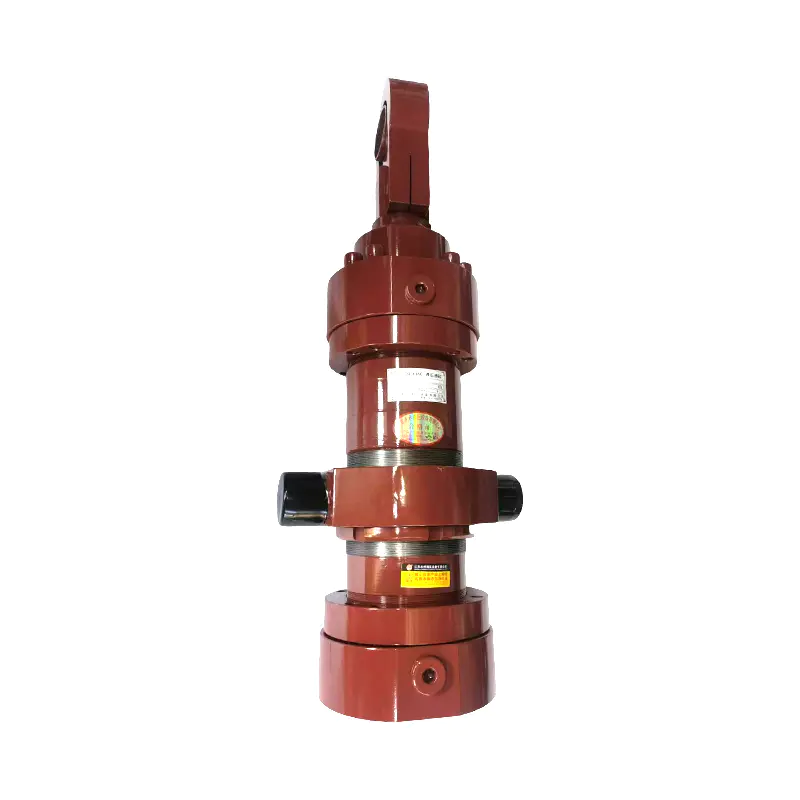
Cylinders are available in many mounting styles, including clevis, trunnion, foot, and flange. A Flange Mounted Hydraulic Cylinder is especially useful for lifting because the flange carries thrust directly into the machine frame. This gives a rigid, straight-line force path and reduces side loading on the rod. When a lift must resist heavy loads along a fixed axis, such as a press, a vertical lift table, or a lifting frame, a Flange Mounted Hydraulic Cylinder is often the most stable choice.
The other mounting styles each suit different layouts:
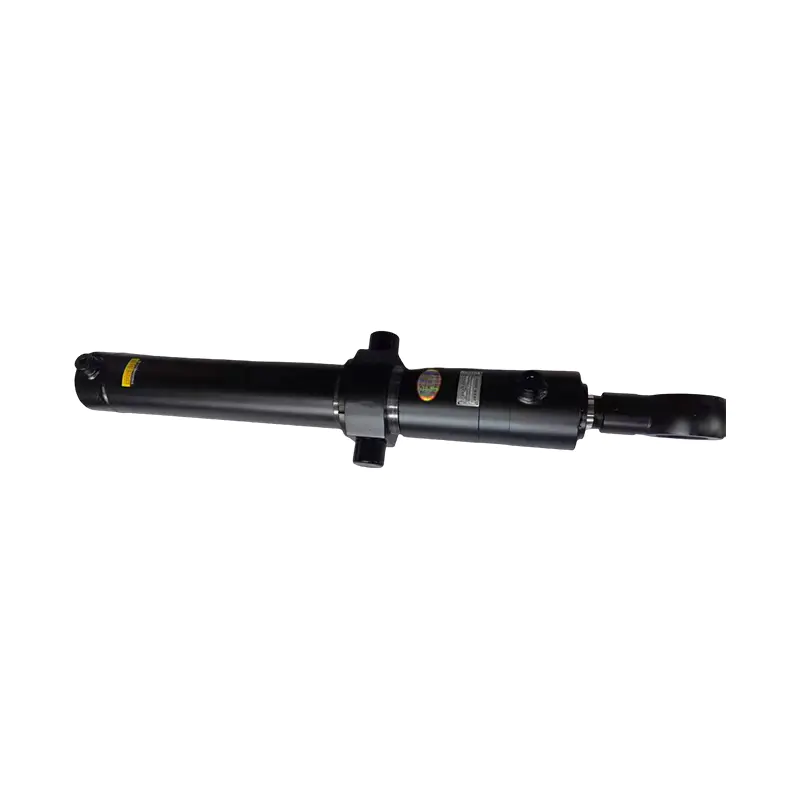
- Clevis and eye mounts allow the cylinder to pivot, which suits tilting and swinging lifts.
- Trunnion mounts suit applications where the cylinder body must rotate about a central pivot.
- Foot mounts suit compact installations along a flat surface.
Because oil travels through hoses or tubes, the power unit can be placed away from the lifting point. This is helpful in tight spaces, dirty areas, or where the motor and pump must be protected. A screw jack puts the hydraulic motor, gearbox, and screw together at the lifting point. That makes layout less flexible, and the unit needs good alignment to avoid bending the screw.
Load Holding and Safety Considerations
Self-locking is the main argument for screw jacks. An acme screw with a low lead angle can hold a load without power, so no brake is needed. This is useful for long static holds, but self-locking depends on friction and can be lost with vibration, wear, or a high-efficiency screw design.
A Standard Hydraulic Cylinder can be made just as safe with standard hydraulic components. A pilot-operated check valve or a counterbalance valve mounted directly on the cylinder port holds the load even if a hose fails, and a flow control valve limits lowering speed. Pressure relief valves protect against overload, and position sensors or limit switches protect the end of stroke.
For extra protection in personnel-related or overhead applications, add mechanical locking pins or support stands. These are required by many safety standards regardless of the lifting technology.
Cost Comparison Over the Equipment Life
The purchase price of a Standard Hydraulic Cylinder is generally lower than a heavy-duty screw jack with a hydraulic motor, especially above 50 kN. The cylinder is a simple tube, rod, piston, and set of seals, while the screw jack includes precision-machined threads, a gear set, a housing, and a motor.
Operating costs also favor the cylinder. Higher efficiency lowers energy use, and cycle times are shorter. Seal replacement is quick and cheap compared with nut, screw, and gearbox repairs.
| Criteria | Standard Hydraulic Cylinder | Hydraulic Motor-Driven Screw Jack |
|---|---|---|
| Mechanical efficiency | 90% to 95% | 20% to 90%, depending on screw type |
| Typical lifting speed | 0.1 to 0.5 m/s | Few mm/s to tens of mm/s |
| Force density | Very high | Moderate |
| Self-locking | Needs a valve or mechanical lock | Yes, with acme screws |
| Duty cycle | Continuous | Often limited by heat |
| Maintenance | Seal kits and oil filtration | Lubrication, nut and gear wear checks |
| Mounting options | Clevis, trunnion, foot, flange | Fixed base and top plate |
| Cost per kN of lifting force | Lower | Higher |
Synchronized Lifting and Control
Screw jacks are often chosen for multi-point lifting because a common drive shaft can tie several units together mechanically. This gives good synchronization without sensors. It is a genuine advantage of the screw design.
Hydraulic systems can reach the same result using flow dividers, proportional valves, or position feedback. A modern Standard Hydraulic Cylinder can include an integral position sensor or an external encoder, which allows positioning accuracy within a fraction of a millimeter. Hydraulic synchronization also handles uneven loads well, because the system can adjust flow to each cylinder.
When a Screw Jack Is Still the Better Option
A fair comparison needs to note where a screw jack is stronger. Choose it when the application matches these conditions:
- The load must be held for hours or days with no hydraulic power running.
- Lifting speeds are very low and positioning is infrequent.
- Several lifting points must stay synchronized without sensors or valves.
- Oil leakage is unacceptable, for example in some clean or food-related environments.
If your lift does not match these conditions, the advantages of the cylinder usually outweigh them.
How to Choose and Size a Standard Hydraulic Cylinder for Lifting
Follow these steps to specify a cylinder for a lifting task:
- Define the maximum load, including the weight of the platform or fixtures, and add a safety factor of at least 1.25 to 1.5.
- Select the system pressure, commonly 16 MPa or 21 MPa for general lifting.
- Calculate the required piston area from force divided by pressure, then choose the next standard bore size.
- Choose the rod diameter and check buckling for long strokes, increasing the rod size if the slenderness ratio is high.
- Pick the mounting style, using a Flange Mounted Hydraulic Cylinder when a rigid, in-line thrust path is needed.
- Calculate the pump flow from the required speed and piston area.
- Add load-holding valves, a relief valve, and end-of-stroke cushioning to complete a safe design.
For example, lifting a 10-tonne load with a 1.3 safety factor needs about 127 kN of force. At 16 MPa, that requires a piston area of roughly 7,950 mm², so a 100 mm bore cylinder is the nearest standard choice. For a 200 mm stroke completed in 4 seconds, the required flow is about 24 L/min.
Conclusion
For general lifting, a Standard Hydraulic Cylinder offers higher force density, much better efficiency, faster travel, simpler maintenance, and lower cost than a hydraulic motor-driven screw jack. Mounting options such as the Flange Mounted Hydraulic Cylinder add structural rigidity, and standard valves provide safe load holding.
Screw jacks remain a reasonable choice for slow, precise, long-hold lifting with mechanical synchronization. When you compare options for your own project, start with the load, speed, duty cycle, and holding requirements. In most industrial lifting applications, those requirements point to the cylinder.