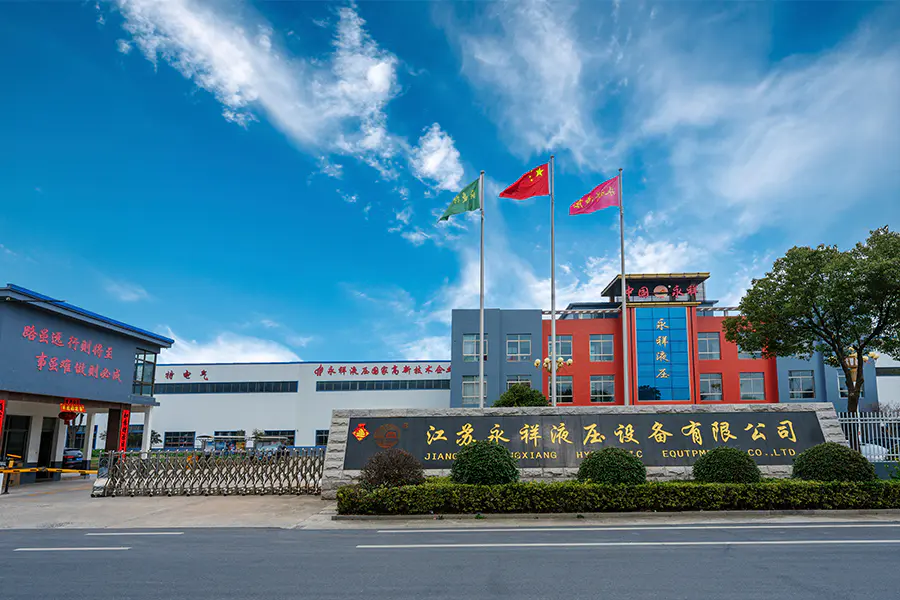
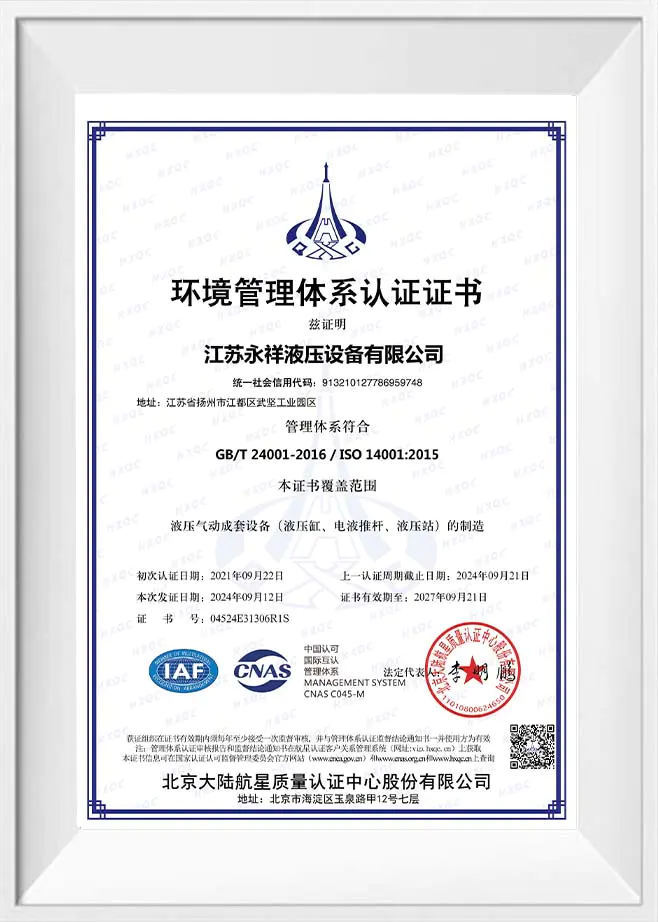
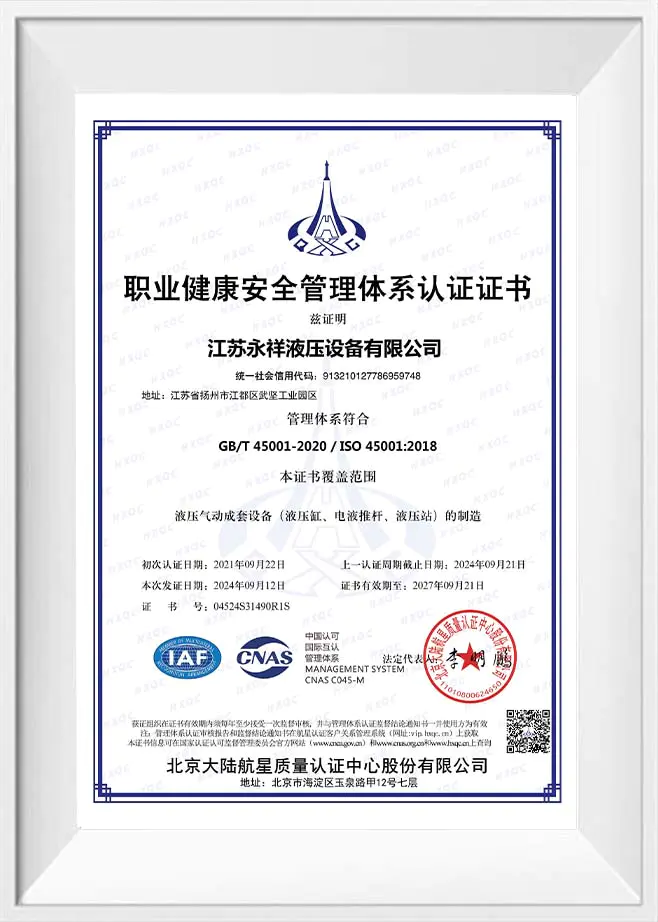
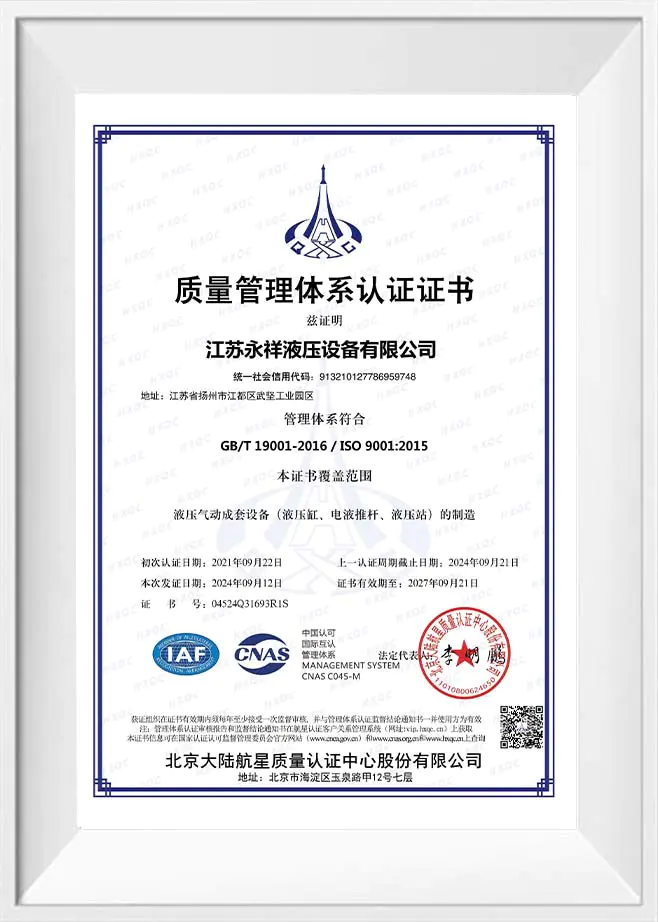
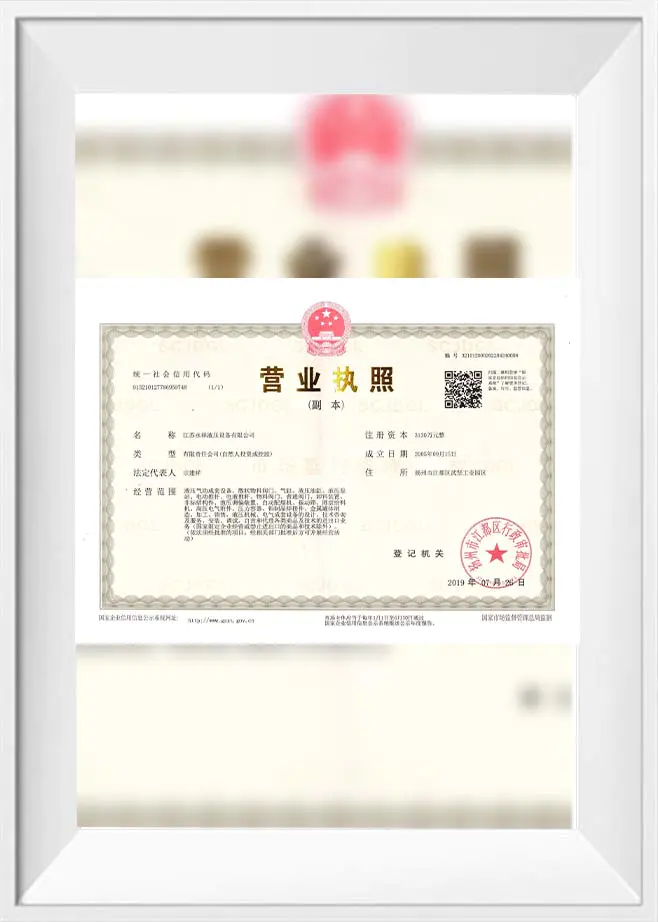
Jiangsu Yongxiang Hydraulic Equipment Co., Ltd. designs and builds cylinders when a catalog product is not sufficient. Our Non-Standard Hydraulic Cylinder manufacturer program covers unusual strokes, mounting geometries, high pressures, environmental exposure, and integrated feedback requirements for automated lines and heavy machines. Based in Yangzhou, Jiangsu Province, China, and operating since 2005, we support OEM/ODM projects across construction machinery, mining equipment, oil and gas, marine systems, and industrial manufacturing.
What We Mean by Non-Standard Hydraulic Cylinders
Standard hydraulic cylinders are available in defined bores, strokes, and mountings for common installations. Non-standard cylinders are engineered when the interface, duty cycle, or control requirement falls outside that envelope. We start from proven Standard Hydraulic Cylinder platforms and adjust the design for the machine, rather than designing from a blank sheet for every order. This reduces risk in sealing, guiding, and manufacturability.
Typical non-standard triggers include:
- Non-catalog stroke, bore, or rod diameter combined with a specific force target
- Mounting forms such as a middle trunnion, special flange, foot bracket, or customer-defined bolt pattern
- High-frequency cycling with limited installation space
- Extreme pressure, shock loads, or alternating stress
- Sensor pockets, proportional valve interfaces, or closed-loop feedback integration
- Corrosive, dusty, wet, or high-temperature environments
Product Range and Application Fit
Our non-standard range is built around the same construction families we use for standard cylinders, with engineering changes focused on your working condition. We configure the barrel, rod, sealing system, mountings, and control interface according to the application.
| Design route |
Typical applications |
What we customize |
| Tie-rod route |
Automated assembly lines, packaging equipment, high-frequency handling |
Foot mounting, port positions, rod end, low-friction sealing |
| Welded route |
Construction machinery, mining equipment, port and material handling |
Barrel thickness, clevis or flange mounting, surface treatment, heavy-duty wipers |
| Heavy-duty metallurgical route |
Steel mills, presses, continuous process lines |
Heat-treated barrel, threaded or flanged connections, adjustable cushioning, high-pressure sealing |
| Telescopic route |
Dump bodies, marine hatches, mobile equipment |
Stage lengths, synchronization, guide materials, retracted length |
| Intelligent integrated route |
Digital production lines, press control, testing rigs |
Displacement sensor pocket, pressure transmitter port, cable routing, proportional valve interface |
For lighter, higher-frequency automation work, our Tie-Rod Hydraulic Cylinder family provides a compact starting point. For high-load and continuous operations, we move to welded or heavy-duty metallurgical construction.
Engineering and Configuration Approach
Every custom design starts with the force requirement and the machine envelope. We calculate the required bore and rod diameter for the working pressure, then check column strength and buckling over the full stroke. Port positions, cushion requirements, piston speed, and duty cycle determine the internal flow path and seal specification.
- Barrel and rod materials with appropriate heat treatment and surface finish for the load cycle
- Mounting style matched to the actual interface on your machine
- Seal package selected for fluid type, temperature range, and contamination level
- Adjustable cushions when high-speed deceleration would otherwise cause impact
- Sensor integration for position or pressure feedback when closed-loop control is required
Materials, Environment and Workpiece Fit
Material selection depends on the operating environment, not just the pressure rating. For metallurgical or construction duty, we specify higher-strength barrels and rod treatments that resist scoring, corrosion, and impact. For automated production equipment, lighter components and optimized internal ports can reduce moving mass and improve response.
Where the cylinder is exposed to moisture, dust, or extreme temperatures, the sealing and wiper arrangement is customized as part of the design. We also account for the fluid being used, because seal material compatibility affects service life and leakage performance.
Capacity, Throughput and Delivery Commitment
Our factory in Yangzhou operates complete hydraulic cylinder machining, assembly, and pressure-testing lines. The production department balances mass production of standard units with flexible scheduling for non-standard orders, which keeps custom projects moving without stopping standard output. Our monthly production capacity is approximately 580 units.
For non-standard orders, the usual planning cycle is 50–60 days after the advance payment is received. The minimum order quantity is one unit, so prototype and replacement projects are practical. After technical confirmation, we can arrange sample confirmation before mass production to lock the dimensions and performance.
Quality Control and Acceptance
Quality control is applied from material receipt to final test. Each non-standard cylinder follows the same discipline as our standard products: machining checks, seal verification, pressure testing, and functional movement testing before packaging. We record the test data and make it available with the shipment.
- Material and dimensional checks on barrel, rod, heads, and mountings
- Assembly with controlled torque and sealing procedures
- Pressure test according to the agreed test pressure
- Functional test for stroke, movement, and leakage
- Packaging and shipping documentation
For first orders, sample confirmation lets you verify the exact mounting, port positions, and cylinder dimensions before our production line starts.
Control and Automation Integration
Non-standard cylinders often need to communicate with machine controllers. We design the mechanical structure around the feedback device, with protected sensor channels and cable outlets that survive the same duty cycle as the cylinder. On intelligent integrated heavy-duty cylinders, we have applied magnetostrictive displacement sensors and pressure transmitters in a heavy-duty housing, enabling position and force feedback to the machine control for closed-loop operation with proportional valves.
When your proposal involves servo or proportional control, we confirm the sensor type, signal interface, and valve mounting in the design phase, so integration is straightforward at machine level.
Information We Use to Configure Your Solution
To prepare a specific non-standard design and quotation, our engineering team needs the working condition and the physical constraints. A drawing or an original part number speeds up the review, but a written description with photos is enough to start.
| Project input |
What it determines |
| Working pressure, flow, and duty cycle |
Bore size, rod strength, port size, seal class |
| Required force, stroke, and speed |
Force calculation, cushioning, buckling check |
| Mounting and available envelope |
Flange, clevis, trunnion, foot, or custom bracket geometry |
| Environment and temperature |
Material protection, sealing, wiper and surface treatment |
| Fluid type and filtration level |
Seal compatibility, guide material, internal surface finish |
| Control interface |
Sensor integration, valve interface, electrical connector and cable routing |
Include the machine manufacturer and model if the cylinder replaces an original component; this helps us match the interface and operating characteristics.
Installation, Maintenance and Service Support
We provide pre-sales selection support, installation guidance, and after-sales technical assistance for every custom order. During commissioning, attention to alignment and connection torque is important for seal life. We document the recommended seal kit and service points for each cylinder so your maintenance team can order the right parts without removing the unit first.
All non-standard cylinders are covered by our standard one-year warranty. We also support OEM/ODM projects where the cylinder carries your part number and specification.
Frequently Asked Questions
Can you build a non-standard cylinder from our drawing or a failed sample?
Yes. We support OEM and ODM customization from drawings, technical specifications, or an original cylinder. A failed sample is especially useful because it lets our engineering team identify the weak point and improve the design.
What information do you need for a quotation?
We need working pressure, required stroke and force, installation dimensions, mounting style, operating environment, and if possible the machine model or original part number. That is enough for a technical review and a proposed configuration.
What is your MOQ and lead time?
The MOQ is one unit. Delivery is approximately 50–60 days after receiving the advance payment, and payment terms are 30% deposit with the balance before shipment.
Can you integrate sensors and make the cylinder part of a closed-loop system?
Yes. We design sensor pockets, cable routing, and valve interfaces into the cylinder. Our intelligent integrated heavy-duty cylinder has been built with magnetostrictive displacement sensors and pressure transmitters for closed-loop position and force control.
What tests are done before delivery?
Each cylinder undergoes dimensional inspection, assembly verification, pressure testing, and a functional movement test. Test results are recorded and available with the shipment. First orders can also go through sample confirmation before mass production.
Are you a factory or a trading company?
We are a professional manufacturer with our factory in Yangzhou, Jiangsu Province, China. We control production, testing, packaging, and after-sales service from that facility.


 English
 日本語
 русский